
Sensory Activities: 5 Proven Ways to Engage Your Child’s Senses (Even If You’re Busy)
Children often struggle to focus or express themselves, especially when they are overwhelmed by their surroundings. But here’s the truth: sensory activities can significantly enhance your child’s development and engagement. In this guide, you’ll discover 5 proven sensory activities that are easy to implement at home, even for the busiest parents.
As a parent, managing time and finding effective ways to engage your child can feel daunting. However, sensory activities are an excellent solution that thousands of parents swear by for stimulating curiosity and creativity. Read on to explore these engaging activities that can transform your child’s playtime.
👶 Age range: 2–8 years
⚡ Fastest activity to start: Water play
💡 Parent-friendly: Yes — all activities require minimal setup
Why These Activities Work for Kids
- ✅ Sensory activities stimulate brain development and improve focus.
- ✅ They can be done quickly, even in short bursts of time.
- ✅ Low-cost or free materials can be used, making it budget-friendly.
- ✅ Most activities are suitable for beginners and require minimal preparation.
- ✅ Many activities provide immediate sensory feedback, keeping kids engaged.
5 Ways to Engage Your Child’s Senses
1. Water Play — A Splash of Fun
💰 Earning potential: Free | ⏱️ Time to first income: N/A | 💵 Startup cost: Free
Water play is an excellent way to engage your child’s senses, allowing them to explore textures and temperatures. This activity can be done in a bathtub, sink, or even outside with a small pool. Children love pouring, splashing, and feeling the water, which enhances fine motor skills and sensory awareness.
To start, fill a basin with water and provide cups, spoons, and small toys. Let them experiment with pouring and floating. Always supervise to ensure safety. Avoid distractions and focus on your child’s engagement with the water.
💡 Pro Tip: Add food coloring for visual stimulation and to make the experience even more exciting.
2. Sensory Bins — A World of Textures
💰 Earning potential: Free to $20 | ⏱️ Time to first income: N/A | 💵 Startup cost: $10–$20
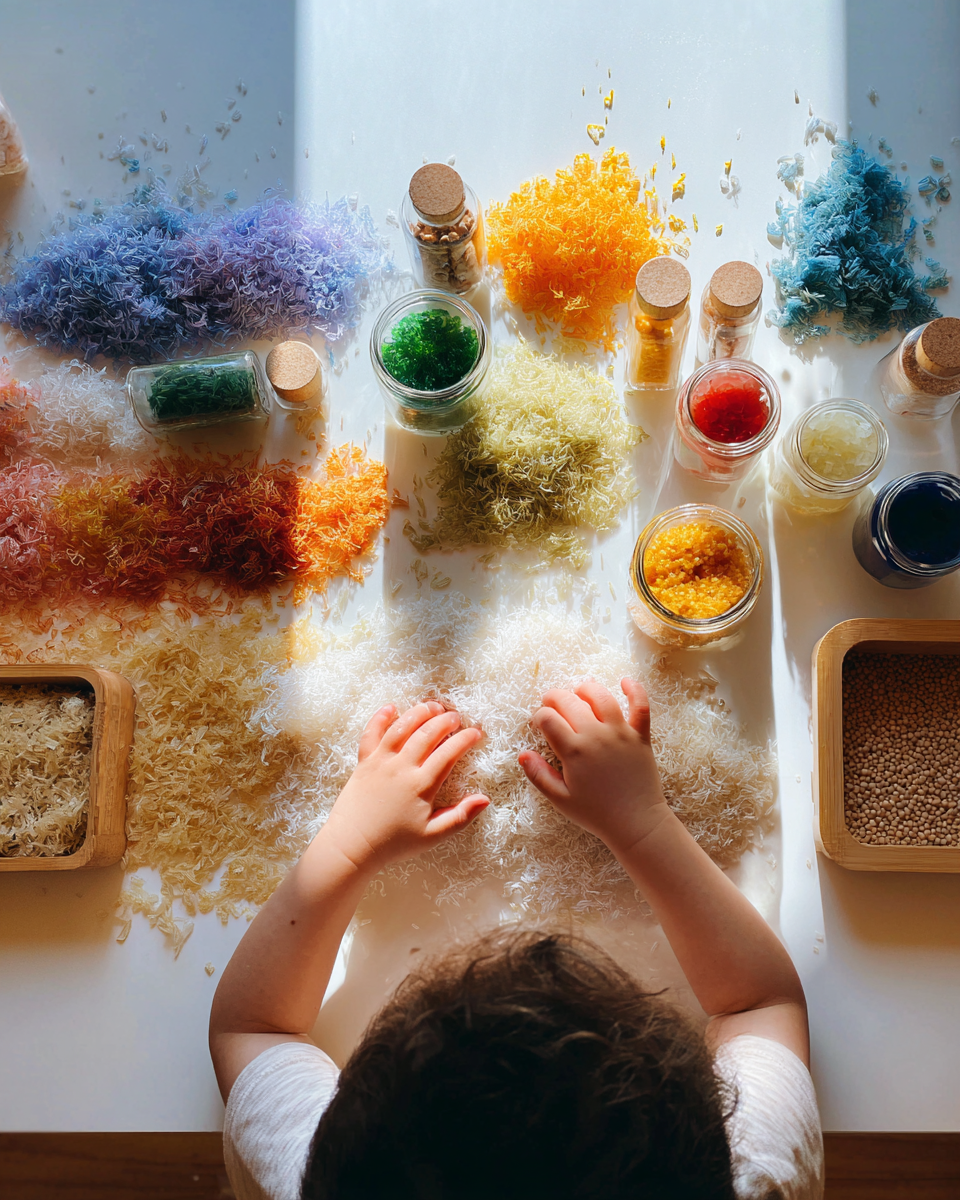
Sensory bins are containers filled with various materials like rice, beans, or sand. They allow children to dig, pour, and explore different textures. This tactile experience promotes sensory development and imaginative play.
To create one, choose a container, fill it with your chosen material, and add scoops, cups, or small toys. Set aside a specific area for play to minimize mess. Ensure they have fun while exploring, and encourage them to describe what they feel as they play.
3. Nature Walks — Exploring Outdoors
💰 Earning potential: Free | ⏱️ Time to first income: N/A | 💵 Startup cost: Free
Taking nature walks can be an enriching sensory experience. As you walk, encourage your child to engage their senses by observing the sights, sounds, and smells around them. This activity enhances their connection with nature and fosters curiosity.
During your walk, ask questions about what they see, hear, and feel. Collect items like leaves or pinecones to explore further at home. Nature walks can be spontaneous or planned, fitting easily into your schedule.
4. Play Dough — Creative Tactile Fun
💰 Earning potential: Free to $50 | ⏱️ Time to first income: N/A | 💵 Startup cost: $5–$10
Play dough is a versatile tool for sensory play. Kids love squishing, rolling, and molding it, which supports fine motor skills and creativity. You can make homemade play dough easily with flour, salt, water, and food coloring.
Provide them with tools like cookie cutters, rolling pins, or even natural items like leaves for stamping. Encourage imaginative play by suggesting they create different items or characters. Store the dough in an airtight container for future use.
5. Scented Sensory Bottles — A Calm Experience
💰 Earning potential: Free | ⏱️ Time to first income: N/A | 💵 Startup cost: $5–$10
Scented sensory bottles can help children relax while engaging their senses. Fill a bottle with water, add essential oils or scents, and include glitter or small toys for visual stimulation. These bottles can be shaken or rolled to create calming effects.
To create one, choose a clear bottle, fill it with water, and add your chosen scents and materials. Allow your child to shake it and watch as the glitter swirls. This activity is perfect for quiet time or moments when they need to calm down.
Which Method Should YOU Start With?
Selecting the right sensory activity can feel overwhelming, but it doesn’t have to be.
- 🕐 If you have less than 15 minutes: Start with Water Play.
- ⚡ If you need a calming activity: Try Scented Sensory Bottles.
- 💰 If you want to spend less than $10: Go with Nature Walks.
- 👶 If your child loves tactile experiences: Sensory Bins are best.
- 🎨 If you want a creative outlet: Play Dough is ideal.
Remember, the key is to pick one activity that resonates with you and your child and start from there.
Mistakes That Stop Most Parents From Engaging in Sensory Activities
Many parents make common mistakes, but these are easily avoidable.
- ❌ Overcomplicating activities: Simple is often better; start small and gradually expand.
- ❌ Not supervising adequately: Always monitor your child to ensure safety during play.
- ❌ Expecting immediate engagement: Give them time to explore and discover at their own pace.
- ❌ Using unsuitable materials: Always choose safe, non-toxic materials for sensory play.
Being aware of these mistakes can help you create a more enjoyable sensory experience for your child.
Frequently Asked Questions
Can sensory activities really benefit my child’s development?
Yes! Sensory activities promote cognitive, social, and emotional development, making them essential for young children.
How long does it take for children to engage in sensory activities?
Many children may start engaging within minutes, but it can take longer for some to fully immerse in the experience.
Do I need special materials for sensory activities?
No, many sensory activities can be done with items you likely already have at home.
Are sensory activities safe for young children?
Absolutely! Just ensure that the materials you use are age-appropriate and non-toxic.
What is the best sensory activity for toddlers?
Water play is often the most engaging and easiest to set up for toddlers.
Engaging in sensory activities is a fun way to enhance your child’s development while creating wonderful memories together. Choose one activity to start with, and you’ll be amazed at how much joy and learning can come from it.
Which method will you try first? Tell us in the comments!
And save this post to your “Parenting Tips” board so you can come back to it!