
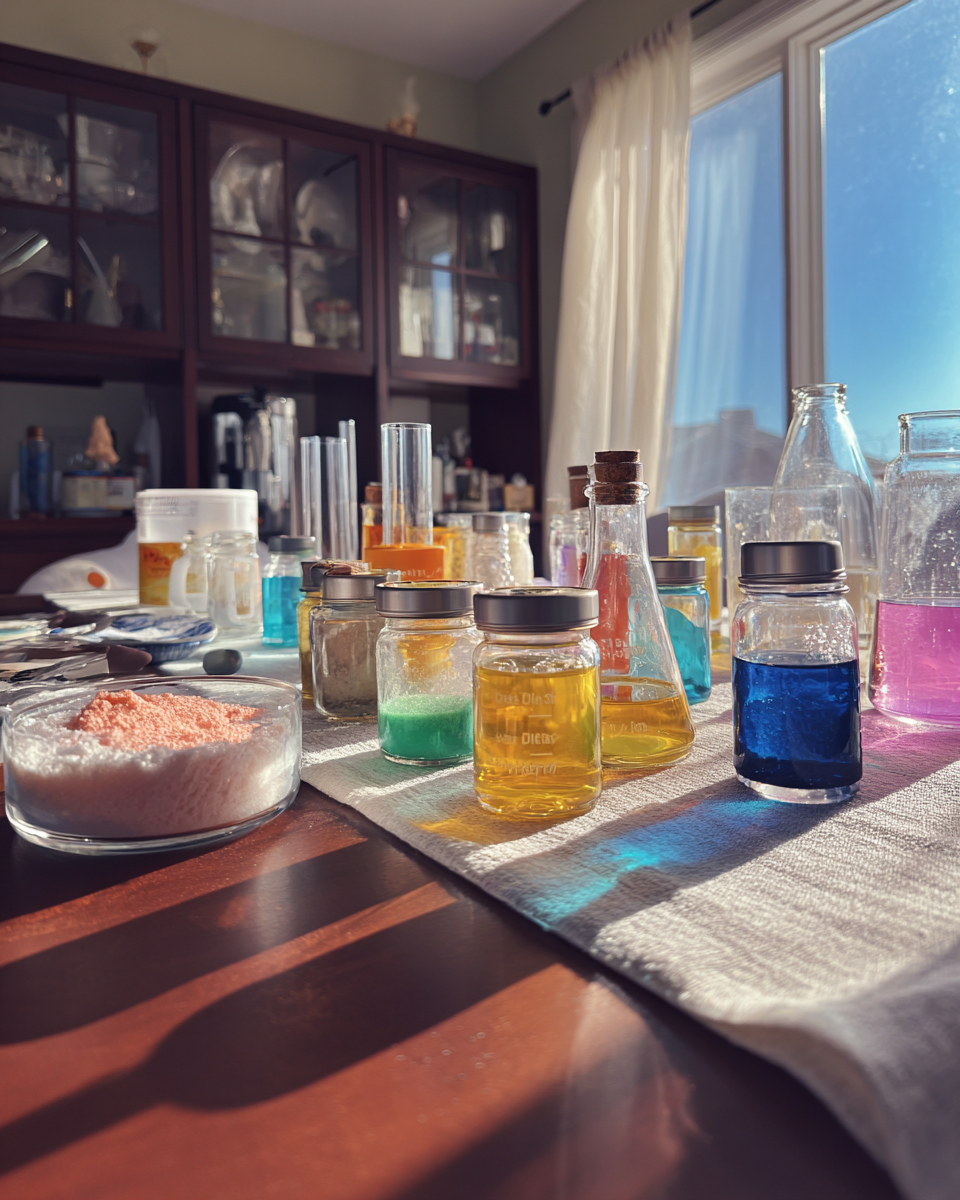
12 Best Science Experiments for Kids Using Household Items That Spark Curiosity
Are you tired of hearing “I’m bored” from your kids? It can be tough to keep their curiosity alive without a trip to the science museum. But here’s the good news: you can spark their interest in science right at home. In this article, you’ll discover 12 engaging science experiments using everyday household items that will keep your kids entertained and learning.
As a parent, I understand the challenge of finding activities that are both fun and educational. These experiments are not only easy to set up, but they also require minimal supervision, allowing you to engage with your kids without feeling overwhelmed. Let’s dive into these exciting experiments that will ignite a passion for science in your little ones!
💰 Cost: $0–$10 per experiment
⚡ Fastest experiment to start: Dancing Raisins
👶 Kid-friendly: All experiments are safe and supervised
Why These Experiments Work for Kids
- ✅ Engaging hands-on activities that promote critical thinking skills.
- ✅ Quick setup using common household items, making them accessible.
- ✅ Low or no cost, perfect for budget-conscious families.
- ✅ Suitable for various age groups, encouraging family participation.
- ✅ Immediate results that captivate children’s attention and interest.
12 Best Science Experiments for Kids Using Household Items
1. Dancing Raisins — Watch Them Move!
💰 Earning potential: $0/month |
⏱️ Time to first income: Immediate |
💵 Startup cost: Free
This experiment lets you observe the effects of carbonation in a fun way. You can do this using a clear glass of soda and a handful of raisins. When you drop the raisins in, they will initially sink, but soon start to dance up and down due to the carbon dioxide bubbles attaching to them.
To start, fill a glass with soda and drop in a few raisins. Watch them “dance” as the bubbles attach and lift them. It’s a fantastic way to explain buoyancy and gas properties!
💡 Pro Tip: Use different types of soda to see if the raisins dance differently!
2. Homemade Volcano — Eruption Fun!
💰 Earning potential: $0/month |
⏱️ Time to first income: Immediate |
💵 Startup cost: Free
Create a mini volcanic eruption with baking soda and vinegar. This experiment demonstrates chemical reactions in a fun and exciting way. You need a small container or bottle, baking soda, vinegar, and food coloring for added effect.
Mix a few tablespoons of baking soda with food coloring in your container, then pour vinegar over it to see the eruption! This is a great way to introduce kids to basic chemistry.
💡 Pro Tip: Use different colors of food coloring for vibrant eruptions!
3. Rainbow in a Jar — Color Mixing Magic
💰 Earning potential: $0/month |
⏱️ Time to first income: Immediate |
💵 Startup cost: Free
This experiment teaches kids about density and color mixing. You’ll need sugar, water, food coloring, and a clear jar. Make different sugar solutions by mixing varying amounts of sugar with hot water and food coloring.
Carefully layer the solutions in a jar, starting with the most concentrated at the bottom. Kids will love seeing the rainbow effect! This is a perfect way to explain concepts of density and solutions.
💡 Pro Tip: Use a spoon to pour the liquids gently to avoid mixing them.
4. Magic Milk — Swirls of Color
💰 Earning potential: $0/month |
⏱️ Time to first income: Immediate |
💵 Startup cost: Free
This colorful experiment demonstrates how soap interacts with fat in milk. Gather milk, food coloring, and dish soap. Pour milk into a shallow dish, add drops of food coloring, and then a drop of dish soap in the center.
Watch as the colors swirl and mix beautifully! This experiment is not only visually appealing but also teaches important concepts about chemical reactions.
💡 Pro Tip: Use whole milk for the best results, as it has higher fat content.
5. Invisible Ink — Write Secret Messages
💰 Earning potential: $0/month |
⏱️ Time to first income: Immediate |
💵 Startup cost: Free
Kids love secrets, and this experiment lets them create invisible messages. Using lemon juice, water, and cotton swabs, they can write messages on paper. Once dried, the message is invisible until held up to a heat source, like a light bulb.
To reveal the message, simply heat the paper. This experiment introduces them to the concept of oxidation and is perfect for sparking creativity!
💡 Pro Tip: Use a hairdryer on a low setting to reveal the messages safely.
6. Egg in a Bottle — Suction Science
💰 Earning potential: $0/month |
⏱️ Time to first income: Immediate |
💵 Startup cost: Free
This classic experiment showcases air pressure. You’ll need a hard-boiled egg, a glass bottle with a neck slightly wider than the egg, and matches. Light a piece of paper and drop it into the bottle, then quickly place the egg on top.
As the flame goes out, the egg will be sucked into the bottle due to the change in air pressure. It’s a fascinating way to explain physics concepts!
💡 Pro Tip: Use a slightly smaller egg for better results!
7. Water Cycle in a Bag — See the Process in Action
💰 Earning potential: $0/month |
⏱️ Time to first income: Immediate |
💵 Startup cost: Free
This experiment helps kids visualize the water cycle. Fill a resealable plastic bag with a small amount of water and some blue food coloring. Seal it tightly and tape it to a sunny window.
Over time, kids will see condensation forming and eventually dripping back down, mimicking rain. It’s a fantastic way to explain evaporation, condensation, and precipitation!
💡 Pro Tip: Use a clear bag to easily see the process unfold!
8. Oobleck — A Solid and a Liquid
💰 Earning potential: $0/month |
⏱️ Time to first income: Immediate |
💵 Startup cost: Free
Oobleck is a fun non-Newtonian fluid that behaves both like a solid and a liquid. Combine cornstarch and water, and let your kids play with it! They can squeeze it into a ball, and it will hold its shape, but it will also flow when left still.
This experiment is perfect for sensory play and introduces kids to the properties of materials.
💡 Pro Tip: Add food coloring for a colorful twist!
9. Static Electricity with Balloons — Charge it Up!
💰 Earning potential: $0/month |
⏱️ Time to first income: Immediate |
💵 Startup cost: Free
This experiment is a simple way to show static electricity. Inflate a balloon and rub it on your hair or a wool sweater to charge it. Then, use the balloon to pick up small bits of paper or even make your hair stand on end.
This fun activity demonstrates the concept of static electricity and can lead to discussions about atoms and charges!
💡 Pro Tip: Try rubbing the balloon on different materials to see varied effects!
10. Homemade Lava Lamp — Colorful Chemistry
💰 Earning potential: $0/month |
⏱️ Time to first income: Immediate |
💵 Startup cost: Free
Create your own lava lamp using water, oil, food coloring, and Alka-Seltzer tablets. Fill a clear bottle halfway with water, add food coloring, then top with oil. Finally, drop in the Alka-Seltzer tablet, and watch as bubbles rise and fall!
This experiment introduces kids to density and chemical reactions in a visually stunning way.
💡 Pro Tip: Use different colored food coloring for unique effects!
11. Wind Energy with a Pinwheel — Harness the Breeze
💰 Earning potential: $0/month |
⏱️ Time to first income: Immediate |
💵 Startup cost: Free
Teach kids about renewable energy by making a simple pinwheel. Use a paper square, a pencil, and a pushpin to create the pinwheel. Once assembled, take it outside and watch it spin in the wind!
This project introduces concepts of wind energy and engineering, sparking conversations about sustainability.
💡 Pro Tip: Experiment with different sizes and shapes for varied results!
12. Seed Germination — Watch Life Grow
💰 Earning potential: $0/month |
⏱️ Time to first income: Immediate |
💵 Startup cost: Free
This experiment lets kids witness the miracle of plant growth. Use beans or peas, damp paper towels, and a clear plastic bag. Place the damp paper towel and seeds in the bag and tape it to a sunny window.
Over the days, kids will see the seeds sprouting, allowing conversations about biology and the needs of plants.
💡 Pro Tip: Keep a journal to track the growth process daily!
Which Experiment Should YOU Start With?
With so many exciting options, choosing one can be overwhelming. Here are a few suggestions to narrow it down:
- 🕐 If you have less than 30 minutes: Start with the Dancing Raisins.
- ⚡ If you need something to impress within an hour: Try the Homemade Volcano.
- 💰 If you want a long-term project: Go with Seed Germination.
- 👶 If you have toddlers: Oobleck is a mess-free option they will love!
- 🎓 If you want to teach chemistry basics: The Magic Milk experiment is a hit!
Remember, the key is to pick one and get started — your kids will thank you!
Mistakes That Stop Most Moms From Doing Experiments
It’s common for parents to face hurdles when it comes to science experiments — but don’t worry; you’re not alone!
- ❌ Overcomplicating the setup: Simplify by using only a few common household items.
- ❌ Expecting immediate results: Some experiments, like seed germination, take time — be patient!
- ❌ Skipping the explanation: Always discuss what they’re observing to enhance learning.
- ❌ Not preparing for mess: Have a designated area for experiments to manage cleanup easily.
Now that you know these common pitfalls, let’s dive into some frequently asked questions!
Frequently Asked Questions
Can I do these experiments with multiple kids?
Yes! These experiments are perfect for small groups and can foster teamwork and collaboration.
How long do these experiments take to complete?
Most experiments can be completed in 30 minutes to an hour, but some, like seed germination, take longer to see results.
Do I need special supplies for these experiments?
No, all experiments use common household items, making them easy and accessible for anyone.
Are these experiments safe for young children?
Yes! All experiments are safe when conducted under adult supervision; however, always review materials beforehand.
Which experiment is the best for teaching kids about chemistry?
The Magic Milk experiment is a fantastic choice for introducing kids to basic chemistry concepts in a fun way!
With these 12 best science experiments for kids using household items, you can make learning fun and engaging. Choose one experiment, gather your materials, and get ready to spark curiosity and excitement in your kids. Which experiment will you try first? Tell us in the comments!
Save this post to your “Kids Science Activities” board on Pinterest so you can come back to it later!